Already Knowing the Ending: How Foreknowledge Transforms the Reading Experience
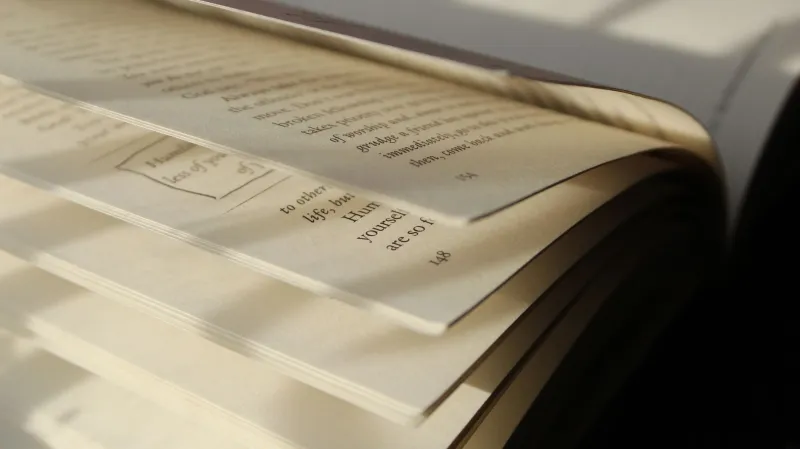
There is a particular anxiety that attaches itself to the contemporary reading experience—a vigilance we exercise on behalf of our future selves. We avoid review sections, mute conversations, and issue quiet warnings to friends. The spoiler, in our cultural imagination, has become a kind of vandalism: a defacement of something that can only be experienced once in its original, unsullied form. And yet this protective instinct, however understandable, rests on a premise that literary criticism has been quietly undermining for decades. Knowing the ending of a novel is not the catastrophe we have been conditioned to fear. For many readers, it is something closer to a gift.
The Myth of Narrative Innocence
The assumption beneath spoiler culture is that the first reading—innocent of outcome—is the truest and most valuable one. This is a seductive idea, but it conflates two very different kinds of attention. When we read without foreknowledge, a significant portion of our cognitive energy is devoted to prediction: to the anxious forward lean of wondering what will happen next. This is pleasurable, certainly. But it is also a mode of reading that is, by definition, not fully present to the text in front of us. We are always partially elsewhere, inhabiting a hypothetical future that the novel has not yet delivered.
When that future is already known, something shifts. The forward lean relaxes. The reader, freed from the compulsion to find out, is at liberty to pay attention to the how rather than the what. Sentences that might have passed unnoticed in the rush of suspense become suddenly legible as deliberate constructions. A word choice that seemed incidental reveals itself as a quiet preparation. The architecture of the novel—its patterns of image, echo, and foreshadowing—becomes visible in a way that first-time reading, however attentive, rarely permits.
What Aristotle Understood That We Have Forgotten
It is worth recalling that this insight is not new. Aristotle, writing on tragedy in the Poetics, observed that the pleasure of dramatic narrative does not depend on ignorance of outcome. The Athenian audience watching Oedipus Rex knew how the story ended before the performance began; the myth was not a secret. What Sophocles offered was not surprise but inevitability—the terrible, clarifying sensation of watching a man walk, step by step, toward a fate the audience could see and he could not. The dramatic irony was the point. The foreknowledge was the mechanism by which the audience could experience something richer than suspense: they could feel the weight of structure itself.
Contemporary fiction, at its best, operates on similar principles. The novelist Donna Tartt opens The Secret History by telling the reader, in the first paragraph, that a murder has taken place and who committed it. This is not a failure of narrative nerve; it is a deliberate inversion of convention. Tartt understands that the interesting question is never simply what happens, but why, and how, and what it costs. By removing the mystery of outcome, she directs the reader's attention precisely where she wants it: toward motive, complicity, and the slow moral erosion of a group of people who believed themselves exceptional.
Rereading as a Discipline
The reader who already knows the ending is, in a meaningful sense, a rereader—and rereading has long been understood by critics as the more sophisticated form of literary engagement. Vladimir Nabokov famously insisted that one cannot truly read a novel; one can only reread it. His point was that the first encounter with a complex work of fiction is inevitably a kind of reconnaissance: we are mapping terrain, establishing characters, following plot. The second encounter—armed with knowledge of where everything leads—is when reading in the fullest sense becomes possible.
This is not merely a theoretical position. Most serious readers will recognize the experience of returning to a novel they love and finding it almost unrecognizable—not because the text has changed, but because they are finally in a position to see it. The early chapters of Cormac McCarthy's The Road, for instance, carry an entirely different emotional register once the reader knows the shape of the journey they describe. The tenderness between father and son, which on first reading might register as warmth, becomes on second reading something more vertiginous: a love measured against annihilation, every gesture shadowed by what the reader now knows is coming.
The Craft Becomes Visible
There is also a specifically writerly argument for the value of foreknowledge. Readers who engage with fiction as a craft—who are interested not only in story but in the decisions that produce story—will find that knowing the ending is almost a prerequisite for understanding what the author has actually done. Foreshadowing, for example, is invisible on first reading almost by definition: if the hint is too legible, it becomes a spoiler in itself; if it is sufficiently concealed, it passes unnoticed. Only the reader who already knows what is being foreshadowed can appreciate the precision with which the author has embedded information in plain sight.
Similarly, the structural choices a novelist makes—where to begin, where to place reversals, what to withhold and for how long—can only be fully evaluated by a reader who understands the whole. The decision to delay a revelation, for instance, means something different depending on what the revelation turns out to be. Without that knowledge, the reader experiences only the delay; with it, they can assess whether the delay was earned.
Suspense Is Not the Only Pleasure
None of this is to argue that suspense is without value, or that the experience of reading a novel for the first time, genuinely uncertain of its outcome, is somehow lesser. That experience has its own distinct pleasures, its own particular form of absorption. The argument, rather, is that this form of reading is not the only legitimate one, and that the cultural reflex to protect it above all others may be costing us something.
What we lose when we treat foreknowledge as damage is the permission to engage with fiction as the complex, multi-layered artifact it actually is. Novels are not puzzles to be solved and set aside. They are structures of language, meaning, and form that reward sustained attention—attention that is, paradoxically, easier to sustain when we are not distracted by the urgency of finding out what happens next.
The spoiler, in the end, may be less a violation than an invitation: a prompt to read the novel rather than merely consume it. The reader who accepts that invitation may discover that the ending was never the point. The point was always the sentences—the particular, unrepeatable way a writer arranged words on a page to make something that had never existed before. That, at least, cannot be spoiled.