Correspondence as Confession: The Quiet Return of the Letter-Driven Novel in American Fiction
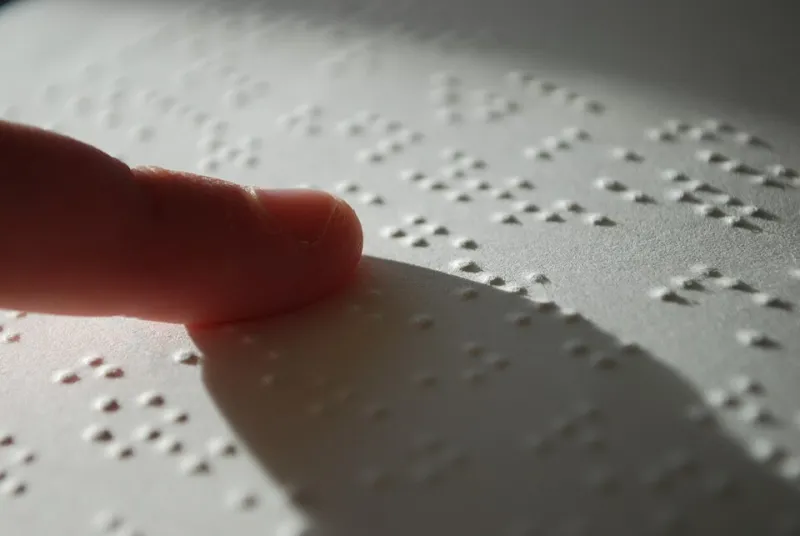
Photo: Pink Sherbet Photography from USA, CC BY 2.0, via Wikimedia Commons
There is something almost paradoxical about the epistolary novel's current moment. At a time when the handwritten letter has become a near-ceremonial object—preserved in shoeboxes, displayed in museum cases, sold at auction—the literary form that depends upon it is flourishing with unexpected vigor. American novelists, in particular, have rediscovered the narrative possibilities embedded in correspondence, finding in letters and their contemporary equivalents a vehicle for stories that conventional third-person narration simply cannot carry.
The epistolary mode is, at its core, a literature of mediation. The reader never encounters events directly; instead, we receive them filtered through the consciousness of a writer composing for a specific recipient. That act of composition—the choices made, the details omitted, the register adopted—constitutes the real drama. It was Samuel Richardson who first exploited this tension systematically in Pamela (1740) and Clarissa (1748), recognizing that a letter is not merely communication but performance. American writers returning to the form today are rediscovering precisely that insight.
The Contemporary Practitioners and Their Methods
Celeste Ng's Little Fires Everywhere (2017) is not, strictly speaking, an epistolary novel, yet its narrative architecture depends heavily on the logic of correspondence—the idea that what people write to one another, and what they choose not to write, carries as much weight as spoken dialogue. Ng's more recent work continues to explore the gap between what characters articulate and what they suppress. Rebecca Makkai, whose The Great Believers (2018) won the Carnegie Medal and was a Pulitzer finalist, uses archival documents and personal letters as structural anchors, allowing the novel to move between decades while maintaining emotional continuity.
Beyond these prominent examples, a broader pattern is discernible. Novelists working across genres—from literary fiction to psychological thriller—are incorporating emails, text message transcripts, forum posts, and social media exchanges as narrative devices. The effect is not merely stylistic novelty; it serves a precise formal function. Fragmented correspondence creates temporal compression and expansion simultaneously, allowing a novelist to skip months of a character's life while rendering a single exchange in granular detail.
Why the Form Resonates Now
The question worth pressing is not simply whether the epistolary novel has returned, but why it has returned with such force at this particular cultural moment. Several interconnected explanations present themselves.
First, there is the matter of authenticity. Contemporary American readers have grown increasingly skeptical of omniscient narration, perhaps because the omniscient perspective—the godlike narrator who knows everything and withholds information strategically—maps uncomfortably onto a media landscape defined by algorithmic curation and institutional distrust. The letter-writer, by contrast, is visibly partial, explicitly situated, transparently self-interested. We know this correspondent is telling us only what they want us to know. That limitation, paradoxically, feels more honest.
Second, the form accommodates the fractured temporality of digital life in ways that conventional narration struggles to replicate. We do not experience our communications linearly. We scroll back through message threads, encounter old emails while searching for something else, discover that a text we sent weeks ago was read but never answered. The epistolary novel can render this non-linear experience structurally, using gaps and silences between letters to create meaning that no amount of descriptive prose could achieve.
Third—and this is perhaps the most philosophically interesting dimension—the revival of epistolary fiction reflects a broader cultural reckoning with what written language actually does. In an era when emails are subpoenaed as legal evidence, when text messages resurface in divorce proceedings, when private correspondence is leaked and published without consent, readers are acutely aware that written words carry consequences their authors never anticipated. The epistolary novel has always been about this precariousness, about the way writing escapes the intentions of its writer.
The Intimacy Problem and Its Literary Solutions
One of the enduring formal challenges of the epistolary novel is the problem of intimacy: how do you create the sense that the reader is overhearing a private exchange without making that eavesdropping feel voyeuristic or contrived? Richardson solved this by making his readers complicit in surveillance; we read Pamela's letters because we are meant to feel the ethical weight of doing so.
Contemporary American novelists have developed more varied solutions. Some deploy the epistolary frame ironically, allowing readers to recognize the performance in their characters' self-presentation even as those characters remain unaware of it. Others use the form to dramatize the collapse of private and public—a character whose emails are forwarded without permission, or whose letters are found after death, discovers that intimacy is always conditional, always subject to redistribution.
Makkai's technique in The Great Believers is particularly instructive. By grounding her narrative in archival documents and personal correspondence from the AIDS crisis of the 1980s, she transforms the epistolary mode into an act of historical witness. The letters are not merely plot devices; they are evidence of lives that might otherwise have been forgotten. This ethical dimension—the idea that preserving correspondence is itself a moral act—gives the novel its emotional authority.
What the Revival Tells Us About Reading
The return of epistolary fiction is ultimately a story about what readers want from literature, and what they find themselves unable to get elsewhere. In a cultural environment saturated with first-person content—the blog post, the personal essay, the social media update—the epistolary novel offers something subtly different: a first-person voice that is explicitly addressed to someone else, that exists in relation rather than in isolation.
This relational quality may be the form's deepest resource. A letter is not a monologue; it is one half of a conversation, haunted by the recipient's anticipated response. Even when that response never arrives—even when the novel consists entirely of unanswered letters—the absent reader shapes every sentence. The epistolary novel, at its best, reminds us that all writing is addressed to someone, that the fantasy of the solitary author communing with some abstract universal reader is precisely that: a fantasy.
For those of us who study the literary imagination and its relationship to the technologies of communication, the epistolary revival offers rich territory. It suggests that form is never merely formal—that the shapes writers choose reflect the pressures of the historical moment in which they write. The letter-driven novel is returning not because American writers have grown nostalgic for quill pens and wax seals, but because the questions it has always asked—about sincerity, privacy, self-presentation, and the dangerous persistence of written words—have never felt more urgent.