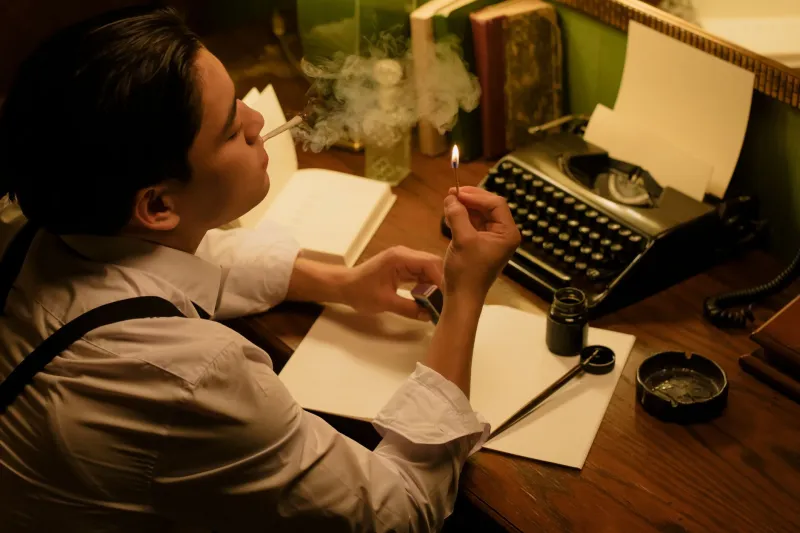
When the Screen Becomes the Book: How Visual Adaptations Colonize Literary Memory
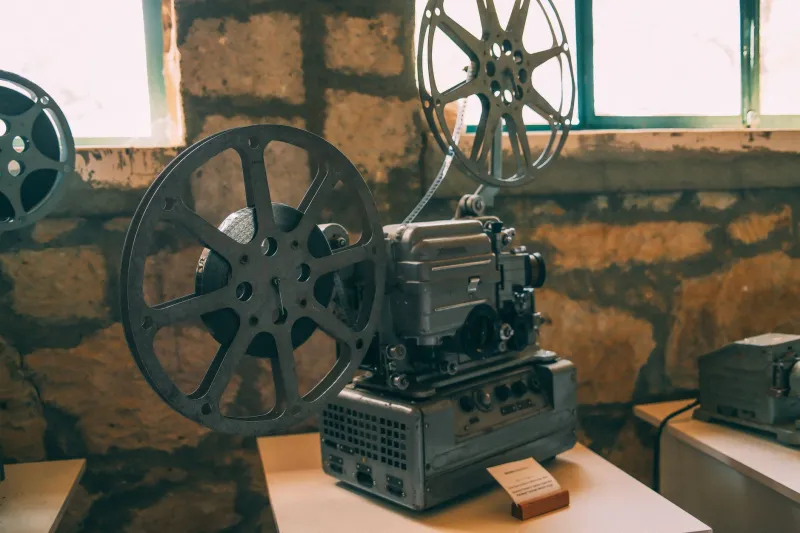
There is a peculiar confidence that settles over a person who has both read a novel and watched its adaptation. They feel doubly equipped, doubly informed—as though the two experiences reinforce one another like load-bearing walls. What they rarely suspect is that the second experience has been quietly demolishing the first, replacing the architecture of the original text with something altogether different, and doing so without their knowledge or consent.
This is not simply a matter of preferring one version over another. It is a more unsettling cognitive phenomenon: the gradual substitution of visual memory for literary memory, until the images on screen become the only images available, and the reader can no longer distinguish between what they read and what they watched.
The Confidence of False Recollection
Ask a room full of well-read Americans to describe the moment in The Shining when Jack Torrance first turns on his family, and a substantial portion will describe a scene that exists only in Stanley Kubrick's 1980 film. Stephen King's novel constructs that violence through psychological escalation and interior monologue—a slow, interior unraveling that the camera, by its nature, cannot fully render. Yet readers who encountered the book years before seeing the film, and who regard themselves as devoted to the text, will insist upon details—the axe through the bathroom door, the famous utterance—that King never wrote. The screen has retroactively edited their reading.
This is not a failure of intelligence. It is a structural vulnerability of human memory, which stores experiences not as fixed recordings but as reconstructions—impressionistic, porous, and susceptible to revision. Each time we recall a novel, we rebuild it from available materials. When those materials include vivid cinematic imagery, the imagery tends to dominate. The moving image, with its sensory immediacy, its faces and voices and physical spaces, is simply more adhesive than the abstract marks on a page.
The Particular Violence of Television
If cinema poses a threat to literary memory, prestige television—with its extended running times, episodic rhythms, and cultural omnipresence—poses something closer to an occupation. HBO's adaptation of Game of Thrones ran for eight seasons, accumulating roughly seventy-three hours of screen time against George R.R. Martin's several thousand pages of prose. For many viewers who also read the novels, the television series has by now become the primary text. They remember the faces of particular actors when they encounter character names in print. They expect plot events to unfold in the sequence the showrunners chose, not the sequence Martin wrote. The novels have become, in effect, supplementary materials to their own adaptation.
This inversion is worth pausing over. Adaptation has traditionally been understood as a secondary enterprise—an interpretation, a translation, an homage. The source text retains primacy. But when the adaptation accumulates sufficient cultural mass, this hierarchy collapses. The novel becomes the footnote, and the screen version becomes the thing itself.
What the Literary Imagination Requires
The literary imagination—the faculty by which we construct interior worlds from language—is not a passive receiver but an active maker. When we read, we do not simply decode information; we generate images, spaces, voices, and emotional textures that are genuinely our own. No two readers produce the same novel from the same text. This is one of literature's most profound gifts: the private world it creates is irreducibly personal.
Visual adaptation forecloses that privacy. It offers a single, authoritative rendering—the director's vision, the casting director's choices, the production designer's aesthetic—and presents it at a scale and with a persuasiveness that the individual imagination struggles to resist. After watching Jennifer Lawrence embody Katniss Everdeen, it becomes nearly impossible to summon an alternative version of that character while reading. The casting decision has colonized the imaginative space that the novel once opened.
This is not to argue that adaptations are without value, or that the relationship between page and screen is inherently hostile. It is to note that the relationship is asymmetrical in ways we seldom acknowledge, and that the losses sustained by the literary imagination are rarely mourned because they occur invisibly.
The Reader Who Discovers They Never Read
Perhaps the most disorienting version of this phenomenon is the reader who returns to a novel after years away, having watched the adaptation multiple times in the interim, and discovers that their confident memory of the book was almost entirely constructed from the film. Scenes they believed they had read were scenes they had only ever watched. Characters they remembered with vivid physical specificity turned out to have been described in the prose with deliberate vagueness. Dialogue they could quote verbatim appeared nowhere in the text.
This experience—common enough to warrant serious attention—amounts to a kind of readerly identity crisis. The person believed themselves to be someone who had read and understood a particular work of literature. They discover instead that they have been, for years, misrepresenting their own relationship to that text. The adaptation did not merely compete with the novel; it impersonated it, successfully enough to deceive the reader themselves.
Toward a More Vigilant Reading Practice
The question this raises is not simply historical or psychological but practical. How does a reader, in an era of abundant and sophisticated adaptation, maintain genuine access to the literary text? How does one encounter a novel on its own terms when those terms have already been extensively reframed by a version one has seen?
One partial answer lies in sequence: reading before watching, when possible, establishes the literary imagination's claim on a text before the screen can assert its own. Another lies in deliberate re-reading—returning to the prose with specific attention to what it actually says, rather than what one believes it said. A third lies in cultivating a critical awareness of the substitution process itself: recognizing, when a vivid image surfaces during reading, whether that image originates in the language or in a prior viewing experience.
None of these strategies is foolproof, and all of them require a degree of readerly vigilance that runs against the grain of how most people engage with stories. We are not, by nature, forensic about our pleasures. We consume narratives gratefully and without suspicion, trusting our memories to preserve what matters.
But what matters, in the case of literary fiction, is precisely what is most vulnerable: the private imaginative transaction between reader and text, the space in which language generates worlds that belong, however briefly, to no one but the reader. When that space is colonized by the image, something genuinely irreplaceable is lost—and the loss is all the harder to mourn because it so closely resembles a gain.