The Books We Carry: How Memory Rewrites the Novels We Think We Know

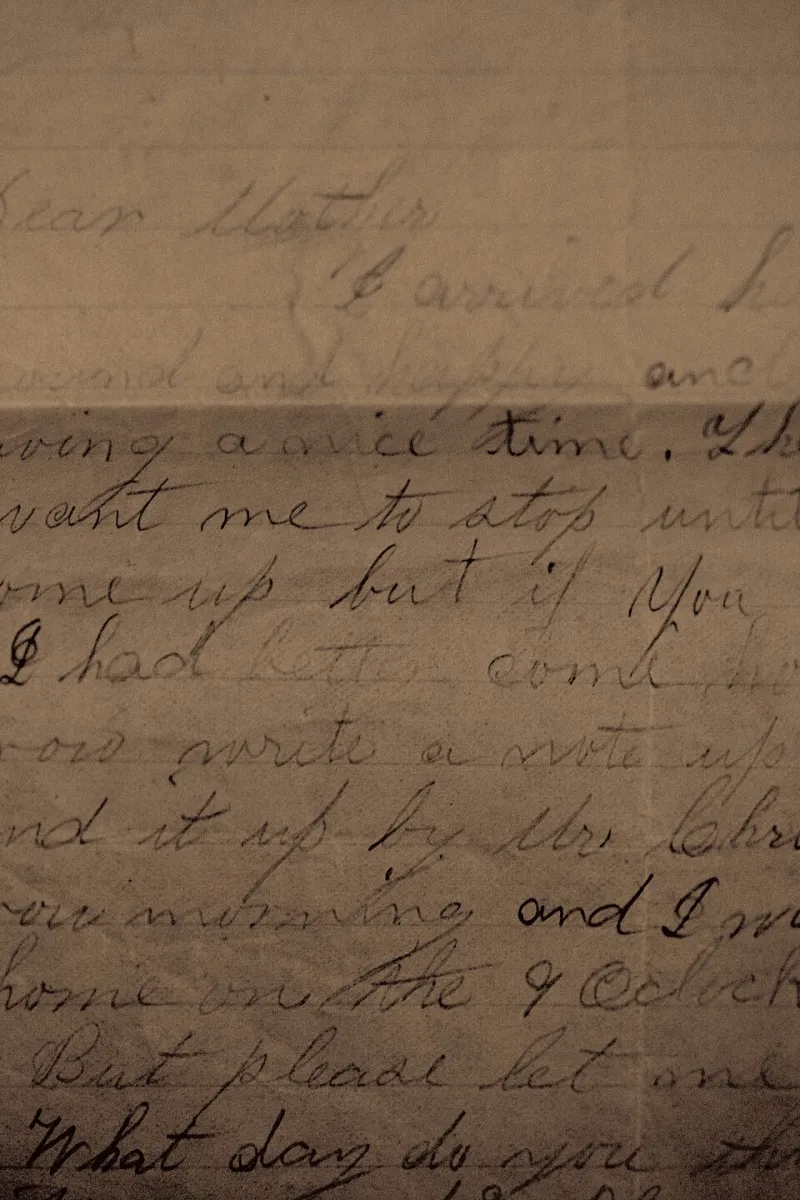
Photo by Photo by Debby Hudson on Unsplash on Unsplash
There is a particular kind of embarrassment reserved for the passionate reader. It arrives at dinner parties and graduate seminars alike: the moment you cite a passage with absolute conviction, only to discover, upon returning to the source, that you have invented it entirely. The words on the page bear only a family resemblance to the words in your memory. The character who you swore was dark-haired is, in fact, never described at all. The ending you have been recommending to friends for years is, at minimum, considerably more ambiguous than your confident summaries ever allowed.
This is the phenomenon of literary misremembering—and it is far more universal, and far more intellectually interesting, than we typically acknowledge.
The Architecture of a Remembered Book
Cognitive psychologists have long understood that memory is not a recording device. It is a reconstructive process, constantly revising and reauthoring experience to accommodate new information, emotional need, and the passage of time. What is perhaps less appreciated is the degree to which this reconstructive tendency operates with particular intensity upon works of literature that we have loved deeply.
When we encounter a novel at a formative moment—in adolescence, say, or during a period of personal upheaval—we do not simply absorb its contents. We negotiate with them. We bring our own fears, desires, and interpretive frameworks to bear upon the text, and the resulting synthesis is something that belongs partly to the author and partly, irreducibly, to us. The book we carry forward is a collaborative document.
Consider the widespread misremembering of F. Scott Fitzgerald's The Great Gatsby, a novel that practically every American high school student encounters and that a remarkable proportion of them subsequently misrecall. Ask readers to describe Gatsby himself, and a significant number will furnish details—a particular gesture, a line of dialogue, a physical description—that exist nowhere in Fitzgerald's actual text. Nick Carraway's narration is deliberately withholding on the subject of Gatsby's appearance and manner, yet readers consistently produce vivid, confident portraits. They have, in effect, completed the novel's deliberate incompleteness with material of their own manufacture.
Famous Misreadings and What They Reveal
The literary record is populated with instructive examples. Readers of Charlotte Brontë's Jane Eyre frequently remember Bertha Mason as more physically present and more narratively central than she actually is—a misremembering that Sandra Gilbert and Susan Gubar's famous critical work The Madwoman in the Attic arguably both reflected and amplified. The critical apparatus surrounding a text can reshape collective memory of it with almost the same authority as rereading.
Similarly, many devoted readers of Toni Morrison's Beloved misattribute specific passages of Sethe's interior monologue to other characters, or recall scenes of violence as more graphically rendered than Morrison's famously elliptical prose actually delivers. The emotional intensity of the novel generates memories that exceed the text's literal contents. Readers remember being devastated in ways the prose only partially accounts for, because the devastation was partly their own work.
In the American short story tradition, the phenomenon is equally pronounced. Readers of Flannery O'Connor routinely remember her grotesque moments as more extended, more dwelt-upon, than they are. Her violence tends to arrive with startling compression; memory, however, expands it into extended sequences. We recall the horror because we completed it imaginatively, and the completion has colonized the memory of the original.
Why This Is Not a Problem
The instinct, upon recognizing literary misremembering, is to treat it as a deficiency—a failure of readerly rigor that better attention or more frequent rereading might correct. This instinct should be resisted.
The philosopher Paul Ricoeur argued that narrative identity—the story we tell about ourselves—is never simply a record of what happened, but an ongoing interpretive act that draws upon cultural, emotional, and imaginative resources beyond mere factual recall. If this is true of autobiographical memory, it seems even more obviously true of our memory of fiction, where the text itself invites imaginative collaboration and where the author's authority over meaning has always been contested.
When we misremember a beloved novel, we are not simply making errors. We are revealing the interpretive work we performed upon it—the questions we brought to it, the answers we needed from it, the lacunae we filled with our own experience. The gap between the text and the memory of the text is, in this sense, a record of reading itself. It is the trace of an encounter that was never merely passive.
The Rereading Experience as Correction and Loss
There is, of course, a corrective available: rereading. And the experience of returning to a beloved novel after years of carrying a revised version of it is among the stranger pleasures available to the literary reader. It involves simultaneous recognition and estrangement—the shock of encountering the actual words where the remembered words used to be.
Many readers describe this as a form of grief. The novel they loved, they discover, was partly a novel they wrote themselves. Rereading does not simply restore the original; it introduces a new version that must coexist with the remembered one. The reader now possesses two books: the one on the page and the one in memory, and neither entirely displaces the other.
This doubling is not a problem to be solved. It is, rather, a precise description of what it means to have been genuinely moved by a work of literature. The books that leave us unchanged, that we recall with documentary accuracy, are perhaps the books that never truly engaged us. The books we misremember are the books we inhabited.
What the Unreliable Reader Tells Us About Texts
There is a final implication worth drawing out. If readers consistently misremember certain kinds of texts in certain kinds of ways, this tells us something important about those texts' rhetorical and emotional strategies. A novel that generates widespread, patterned misremembering is a novel that has successfully solicited imaginative participation—that has, by design or by instinct, left productive spaces for the reader to enter and complete.
The greatest American novels may be, in this sense, the ones that are most systematically misremembered: the ones that provide enough structure to orient imaginative investment while leaving enough open to require it. They are, in other words, the novels that trust their readers—and that are, in turn, rewritten by them, endlessly and lovingly, across the whole span of a reading life.