Workshop-Built: The Quiet Bargain Between the MFA and the American Novel
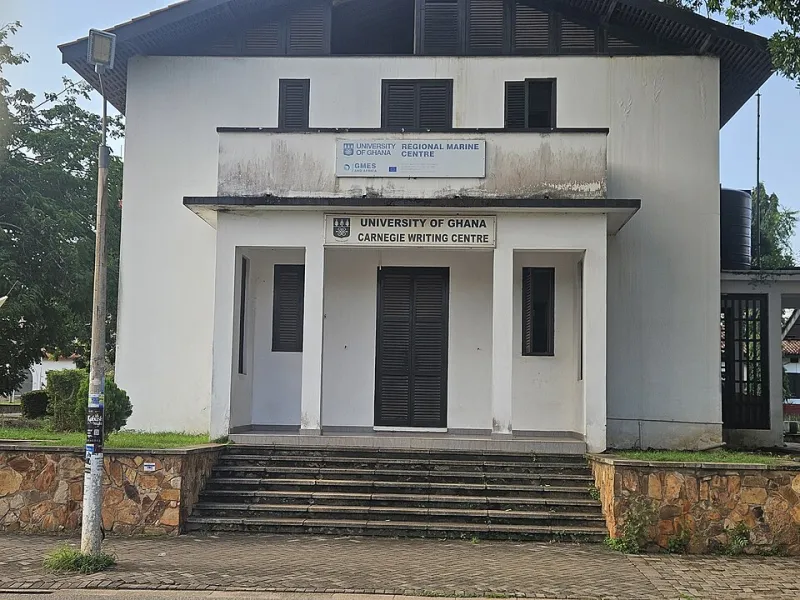
Photo: Nanakwafoa, CC BY-SA 3.0, via Wikimedia Commons
It is one of the great quiet transformations of American literary life. Half a century ago, the novelist's origin story was the newsroom, the freight yard, the war. Today it is the seminar room: a two- or three-year apprenticeship in which a dozen peers read your pages aloud and the instructor asks, gently, what your protagonist wants. The MFA has become the default credential of American literary fiction, and whatever we think of that, it deserves more scrutiny than the usual carping allows.
What the Workshop Actually Teaches
The standard critique holds that programs manufacture technically polished, emotionally anesthetic fiction — stories in which every sentence is load-bearing and nothing is at stake. There is truth in the caricature. Workshop pedagogy, whatever its variations, rewards certain virtues: clarity of intention, economy of scene, the well-managed reveal. It is harder to teach audacity, and nearly impossible to grade a appetite for risk.
The result, at its weakest, is the novel as very good short story extended — competent, controlled, and curiously weightless, a book you admire the way you admire a well-run restaurant kitchen.
The Case for the Program
But the caricature omits the strongest defense: time. The workshop's real gift is not instruction but subsidy — two or three years in which a writer is permitted to fail on the page without economic consequence, surrounded by others failing in adjacent rooms. Most of the great first novels of the past forty years were, in some sense, written in that protected interval. The program did not make the talent; it gave the talent somewhere to stand.
There is also the matter of access. The workshop system, whatever its faults, professionalized a profession, and its expansion coincided with the entry of writers — of women, of writers of color, of first-generation Americans — who had historically been kept out of the literary economy by every gate but the seminar room's.
The Ones Who Broke the Mold
The most instructive careers belong to writers who treated the program as a door rather than a destination. Some arrived with a voice already formed and used the degree tactically, as credential and visa, then spent their books dismantling workshop orthodoxy from within — writing novels that were formally unruly, emotionally excessive, structurally disobedient. Others left early or skipped the apparatus entirely, and their work bears the marks of its absence: rough edges, wild tonal shifts, sentences that break rules the workshop would have flagged in red.
What these careers collectively suggest is that the MFA is neither a factory nor a fraud. It is an instrument, and instruments favor certain kinds of music. The problem arises only when the instrument mistakes itself for the orchestra.
The Real Cost
The genuine price of the workshop model is not aesthetic but economic and geographic. It concentrates literary life in a handful of college towns, ties the working writer's livelihood to the academy, and quietly narrows the range of American experience a writer can afford to write about. A novelist who must win a teaching job to pay rent will feel that pressure in the books — not in the sentences, which will be fine, but in the subjects, which will be safe.
The American novel does not need rescuing from the workshop. It needs the workshop to remember it is a scaffold, not a cathedral — and it needs readers to keep rewarding the books, from whatever origin, that remind us what the form can still risk.