What We Bring to the Page: The Reader as Co-Author of Literary Meaning

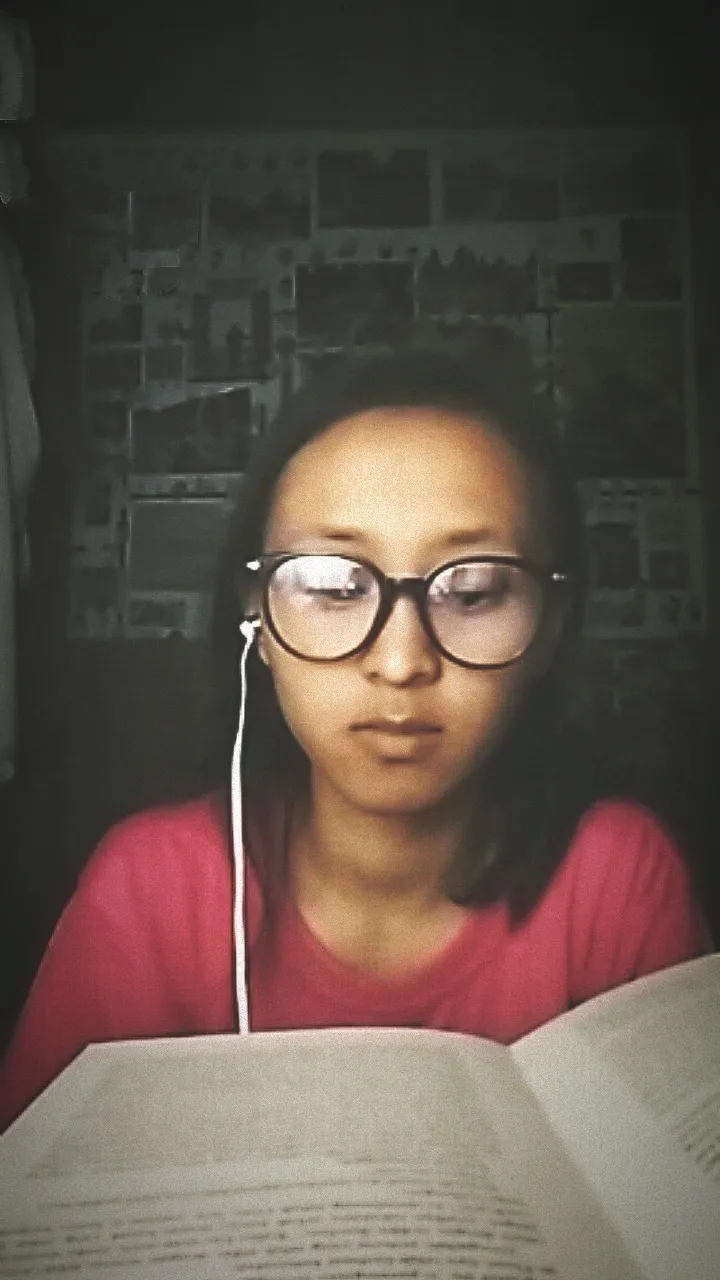
Photo: Nenad Stojkovic, CC BY 4.0, via Wikimedia Commons
There is a comfortable fiction at the heart of literary culture: that the book on the shelf is a stable object, waiting patiently to deliver its meanings to whoever opens it. We speak of what a novel says, what a poem means, as though these were fixed properties, like the weight of a stone or the color of a wall. But the history of reading tells a more unsettling story. Books do not sit still. They shift and shimmer under the pressure of the minds that encounter them, and those minds—shaped by personal history, cultural moment, and the thousand invisible prejudices of lived experience—are far less neutral instruments than we tend to assume.
The critic we rarely discuss, in other words, is the one reading the text. We have spent decades developing sophisticated frameworks for the unreliable narrator—the Humbert Humbert who seduces us into his worldview, the Stevens of The Remains of the Day who cannot see what the reader can plainly observe. Yet we have been slower to turn that same analytical lens on ourselves. The unreliable reader, it turns out, is everywhere.
The Bias We Cannot See
Consider what happens when a novel passes through time. The Great Gatsby, taught in American high schools for generations, has been received in strikingly different registers depending on when and by whom it was read. Mid-century readers frequently encountered it as a romantic tragedy, a lament for the beautiful and the doomed. Later readings, informed by feminist criticism and postcolonial theory, surfaced the novel's casual misogyny, its ethnic anxieties, its contempt for the aspirational classes it pretends to mourn. Neither reading is simply wrong. Both are, in an important sense, true—but they are also portraits of the readers who produced them, shaped by what those readers needed the book to be.
This is not a failure of reading. It is reading at its most honest. Every interpretation is a negotiation between the text and the self, and the self inevitably brings its own agenda to the table. The question worth asking is not how we might eliminate this bias—an impossible project—but what these competing misreadings reveal about both the literature and the cultural moment that generated them.
The Text as Mirror
Harper Lee's To Kill a Mockingbird offers an instructive case. For decades it served as a kind of secular scripture in American classrooms, a parable of moral courage and racial justice delivered through the clarifying innocence of Scout Finch. Then, gradually and then all at once, readers began to see something else: a narrative that centers the white savior rather than the Black community it purports to defend, that offers comfort to white readers while requiring little of them. The text had not changed. What changed was the reader's willingness—or unwillingness—to be comforted.
This shift does not invalidate earlier readings, but it does complicate them. It reveals that the generations who embraced the novel as straightforwardly progressive were, in part, reading their own desires into it: the desire to believe that decency, deployed by the right individual, could stand against systemic injustice. Later readers, less willing to accept that bargain, found a different novel in the same pages. Both versions are, in Roland Barthes's phrase, produced by the reader as much as by the author.
Experience as Interpretive Lens
Personal history operates with equal force. The reader who encounters Sylvia Plath's The Bell Jar at seventeen, before depression has a name or a face, may receive it as a document of alienation and dark glamour. The same reader at forty, having lived with mental illness—their own or someone else's—finds a different book entirely: more clinical, more frightening, more precise in its rendering of cognitive collapse. The words are identical. The reading is not.
This phenomenon is familiar to anyone who has returned to a beloved novel after years away. We call it rereading, but it might more accurately be called re-encountering a prior self. What we find, more often than not, is that the book has moved. Passages we overlooked now seem central; characters we admired now seem compromised; endings we found satisfying now seem evasive. The book has not moved, of course. We have. And the distance between those two readings is a kind of autobiography.
Productive Misreading
The literary theorist Harold Bloom argued that all strong readings are, in some sense, misreadings—willful, creative distortions that allow the reader to make the text their own. This is a provocative claim, but it contains a genuine insight. The readings that endure, that generate conversation and controversy and further reading, are rarely the ones that simply confirm what the author intended. They are the ones that find something the author may not have known was there.
This is why the history of literary interpretation is not a progress narrative, a march toward ever-greater accuracy. It is more like a long conversation in which each generation speaks back to the text from where it stands. The misreadings accumulate, and in their accumulation they tell us something that no single reading could: that literature is not a message but a field of possibility, activated differently by different minds at different moments.
What This Demands of Us
Acknowledging our own unreliability as readers is not an invitation to interpretive relativism—the lazy conclusion that all readings are equally valid and none worth defending. Some readings are more careful, more historically informed, more attentive to the full complexity of the text than others. The discipline of literary criticism exists precisely to distinguish among them.
But it does demand a certain epistemic humility: the recognition that our reading is never simply the text speaking, but always a collaboration between the text and the mind that meets it. The books we carry through our lives are, in part, books we have written ourselves—assembled from what the author provided and what we could not help but bring. That is not a diminishment of literature. It is, perhaps, the most compelling argument for why literature matters at all.